Shashank Mishra from the Augmented Vision department at DFKI has been recognized as a Top Reviewer at NeurIPS 2026, one of the leading international conferences in machine learning and artificial intelligence.
This recognition acknowledges his contribution to the scientific peer-review process through high-quality and constructive reviews, supporting the evaluation and advancement of research in machine learning.
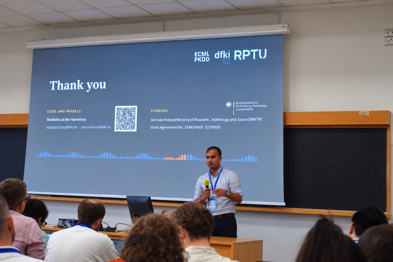
Our paper, “Conditional Attribution for Root Cause Analysis in Time-Series Anomaly Detection,” by Shashank Mishra, Karan Patil, Cedric Schockaert, Didier Stricker, and Jason Rambach, was accepted for an oral presentation at ECML PKDD 2026, held in Naples, Italy, from September 7 to 11, 2026. Shashank Mishra presented the work at the conference.
The paper introduces a novel conditional attribution framework for identifying the sensors responsible for anomalies in multivariate time-series data. By comparing anomalous observations with contextually similar normal system states, the proposed approach preserves dependencies between sensors and provides more reliable explanations. Experiments on industrial benchmark datasets demonstrate improvements in root cause identification, temporal localization, and robustness.
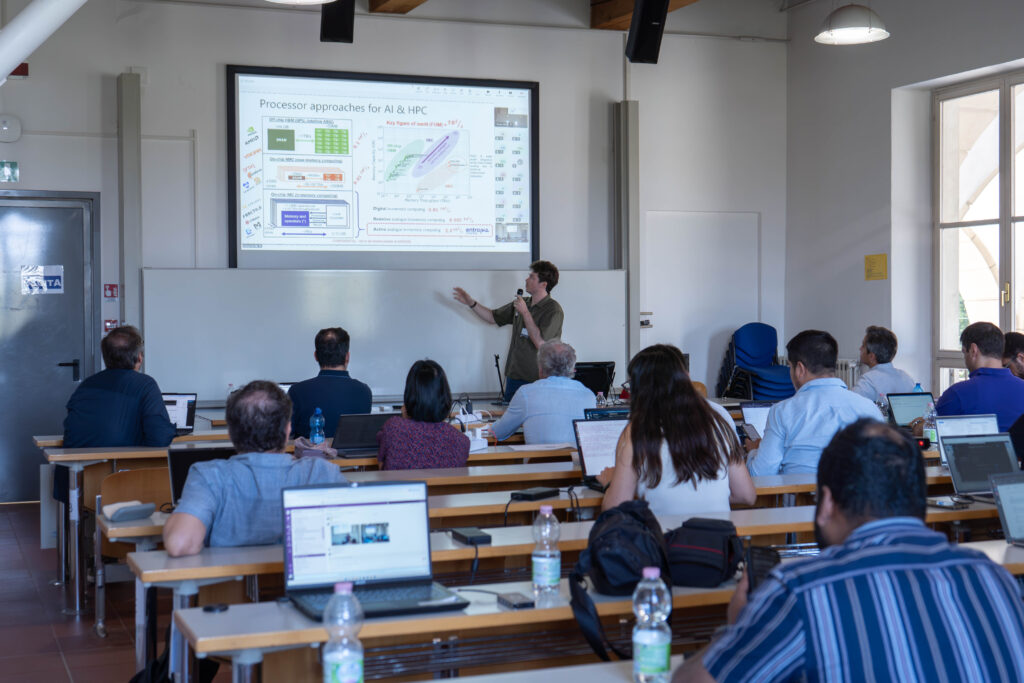
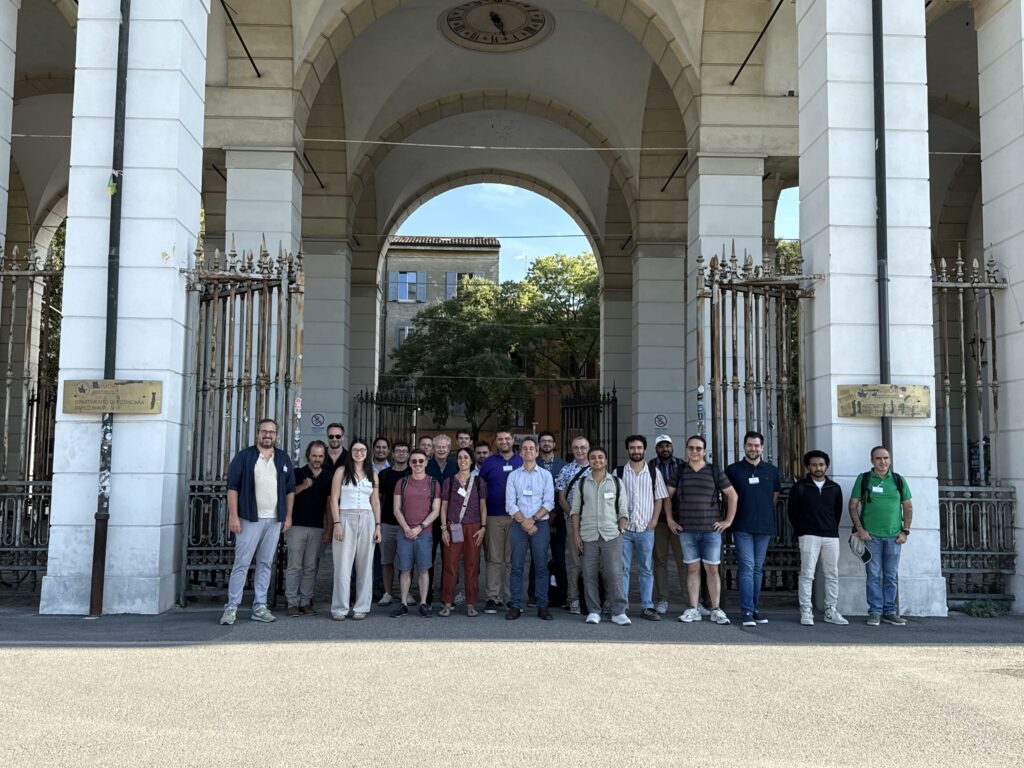
The dAIEDGE consortium held its 6th and final General Assembly in Modena, Italy. The two-day meeting was hosted by the University of Modena and Reggio Emilia and brought together the project partners to review the latest achievements, discuss the remaining activities and prepare for the final phase of the project.
dAIEDGE is coordinated by Dr. Alain Pagani from the Augmented Vision department at DFKI. During the meeting, the consortium reviewed progress across the project work packages, including technical developments, dissemination and exploitation activities, strategic research priorities, and preparation for the final review. DFKI led the sessions on WP2 and, together with the University of Edinburgh, WP1.
A further focus of the meeting was the preparation of the dAIEDGE Innovation Days, which will take place on 21–22 October 2026. The event will present the technologies, results and impact developed throughout the project and bring the dAIEDGE community together for the final project event.
The General Assembly also included a visit to MASA’s facilities, where participants had the opportunity to see dAIEDGE use cases in action and connect the project’s research and technological developments with real-world applications.
The meeting in Modena marked an important milestone for the consortium, providing an opportunity to review the progress achieved over the course of the project and to align the final activities before the conclusion of dAIEDGE.
Dr. Jason Rambach and Dr. Alain Pagani from the Augmented Vision department have been selected as Outstanding Reviewers at the European Conference on Computer Vision, ECCV 2026.
The distinction recognizes reviewers who provided particularly high-quality and valuable reviews during the conference reviewing process. Being selected as an Outstanding Reviewer reflects the researchers’ contribution to maintaining the scientific quality of one of the leading international conferences in computer vision.
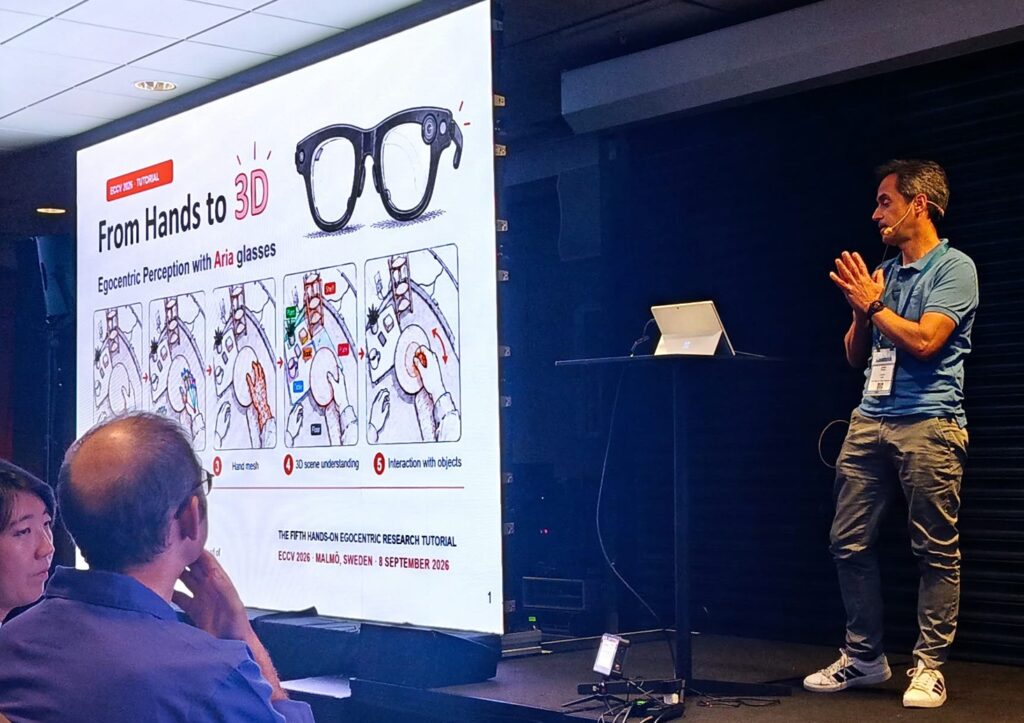
The Augmented Vision department participated in the “Fifth Hands-on Egocentric Research Tutorial” at ECCV 2026 in Malmö, Sweden, on September 8, 2026. The tutorial was organised by Meta Project Aria and focused on research using egocentric sensing and wearable devices.
Dr. Alain Pagani gave the talk “From Hands to 3D: Egocentric Perception with Aria”, presenting recent research of the Augmented Vision department on 3D hand perception, hand-object interaction and 3D scene reconstruction from egocentric cameras.
The presentation included EgoForce, the department’s recent work on metric 3D hand pose and shape estimation from a monocular egocentric camera, as well as ongoing research on contact and force understanding in hand-object interactions. It also covered 3D scene reconstruction from Aria glasses using Gaussian Splatting, including reconstruction from very sparse image observations.
The tutorial provided an opportunity to present the department’s current work in egocentric perception and to exchange with the Project Aria research community.
We are pleased to announce that our paper, “Sequence-SOD: Bio-inspired Sequence-aware Spiking Object Detection for Event Cameras,” by Katharina Bendig, René Schuster, and Didier Stricker, has been accepted for publication in Cognitive Computation, a Springer Nature journal. The paper introduces a sequence-aware approach that enables spiking neural networks to better exploit temporal information in continuous event-camera data.
We are pleased to announce that DFKI’s Augmented Vision department was invited to Meta Reality Labs in Redmond, WA, to present our Project Aria work at the third Egocentric Intelligence Research Summit. Project Aria is Meta’s research platform for egocentric perception; display-free sensor glasses that let academic partners collect first-person data for work in machine perception, contextual AI, and augmented reality.
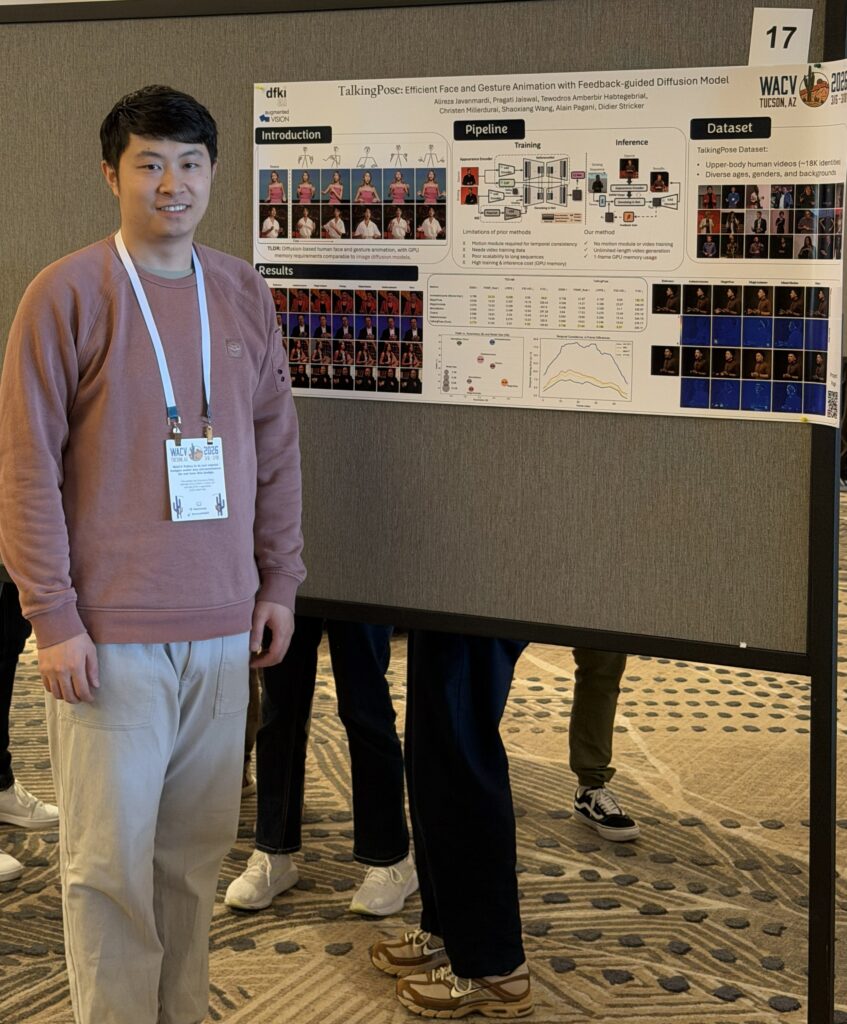
Shreedhar Govil and Shaoxiang Wang represented the department, giving a talk and poster presentation on DriverGaze360 and EgoForce. We look forward to continuing our collaboration with Meta and thank them for access to this data collection tool and research community.
The ENFIELD Final Conference, “Advancing AI in Europe: From Foundations to Real-World Applications,” brought together researchers, policymakers, industry representatives and European AI initiatives in Brussels on 7 and 8 July 2026. As a sister Network of Excellence, dAIEDGE contributed to the event and further strengthened the collaboration between the two projects.
The Networks of Excellence in AI ENFIELD and dAIEDGE address complementary dimensions of next-generation AI. While ENFIELD focuses on adaptive, green, human-centric and trustworthy AI, dAIEDGE advances distributed, efficient and trustworthy AI at the edge. Both projects contribute to connecting research communities and reducing fragmentation within the European AI ecosystem.
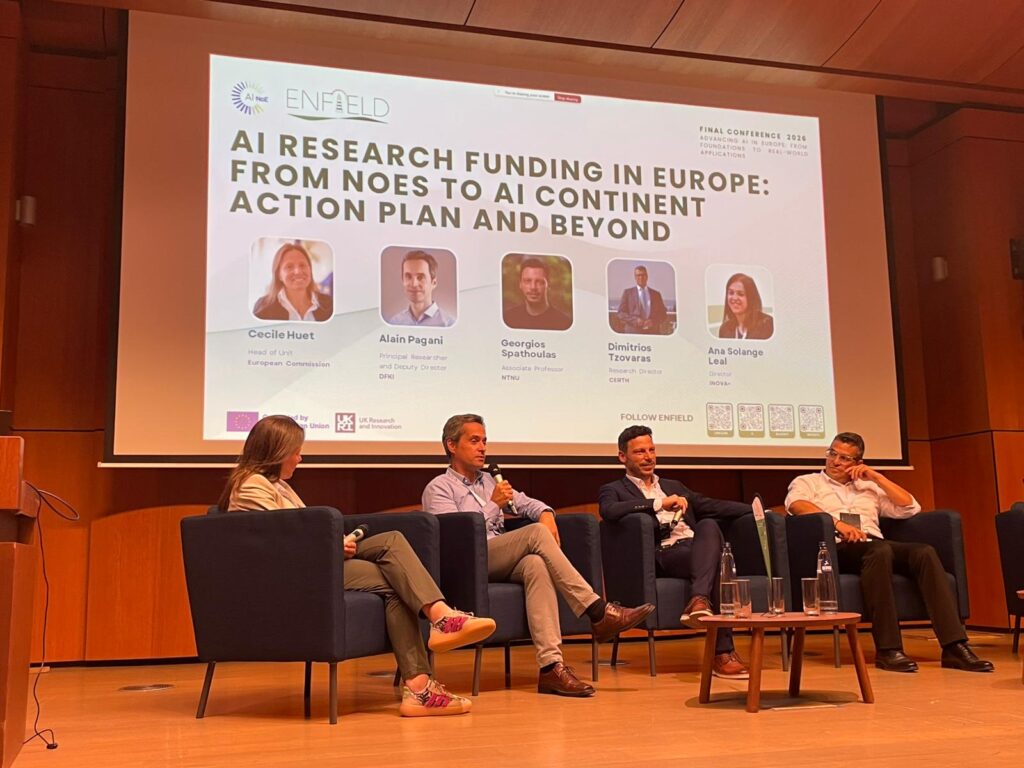
Alain Pagani, coordinator of dAIEDGE, participated in the panel “AI Research Funding in Europe: From NoEs to AI Continent Action Plan and Beyond.” Moderated by Ana Solange Leal from INOVA+, the panel also included Cécile Huet, Head of Unit for Robotics and Artificial Intelligence Innovation and Excellence at DG CNECT, Georgios Spathoulas from NTNU and Dimitrios Tzovaras from CERTH.
The discussion reflected on the achievements of the Networks of Excellence and on how their communities, expertise and collaborative structures can continue beyond the end of the individual projects. Particular attention was given to stronger cooperation across countries and initiatives, closer links between research and industrial uptake, and the role of the Networks of Excellence in future European AI strategies.
dAIEDGE also contributed to the panel “Edge AI: Robustness, Continual Learning and Real-World Deployment,” with Ovidiu Vermesan from SINTEF discussing key challenges for adaptive AI systems in real-world edge environments.
The participation of dAIEDGE reflects the close cooperation between the two Networks of Excellence and their shared ambition to strengthen long-term collaboration within Europe’s AI research and innovation community.
The European research project IRIS-XR – Immersive Realism through Integrated Sensing and Optics for eXtended Reality – held its kick-off meeting on 11 and 12 June 2026. The project develops innovative photonic and AI-based technologies for next-generation extended reality systems, with the aim of enabling more natural, efficient and immersive interaction in virtual and augmented environments.
IRIS-XR combines advanced display technologies with integrated sensing and intelligent perception. Key developments include display-integrated infrared illumination for eye tracking, event-based depth sensing for hand and gesture analysis, and AI-based methods for the joint interpretation of gaze, hand movements and the surrounding environment. The resulting technologies will be integrated into a new XR hardware and software platform designed to improve interaction quality while reducing latency, cognitive effort and energy consumption.
DFKI contributes its expertise in computer vision, machine learning and human-centred XR. The Augmented Vision research department leads work on egocentric hand and gesture analysis, contributes to the integration and orchestration of multimodal sensor data, and is responsible for the technical validation of the developed platform. The technologies will be evaluated in application scenarios covering healthcare, flight simulation and automotive use cases.
Duration: 01.06.2026 – 31.05.2029 Programme: Horizon Europe – Research and Innovation Action (RIA) Research Department: Augmented Vision Partners: DFKI, Varjo, VoxelSensors, ITI, Mercedes-Benz, Reiser, University College Dublin, Australo, Coordinator: Dr. Alain Pagani Research topics: Computer Vision, Artificial Intelligence, Extended Reality, Human-Computer Interaction, Eye Tracking, Hand and Gesture Analysis
The paper connects the real-world problem of evolving class sets to AI-based document layout analysis.
Special recognition goes to Nick Jochum for carrying out the thesis work that formed the foundation of this publication, as well as to Insiders Technologies for the valuable collaboration.
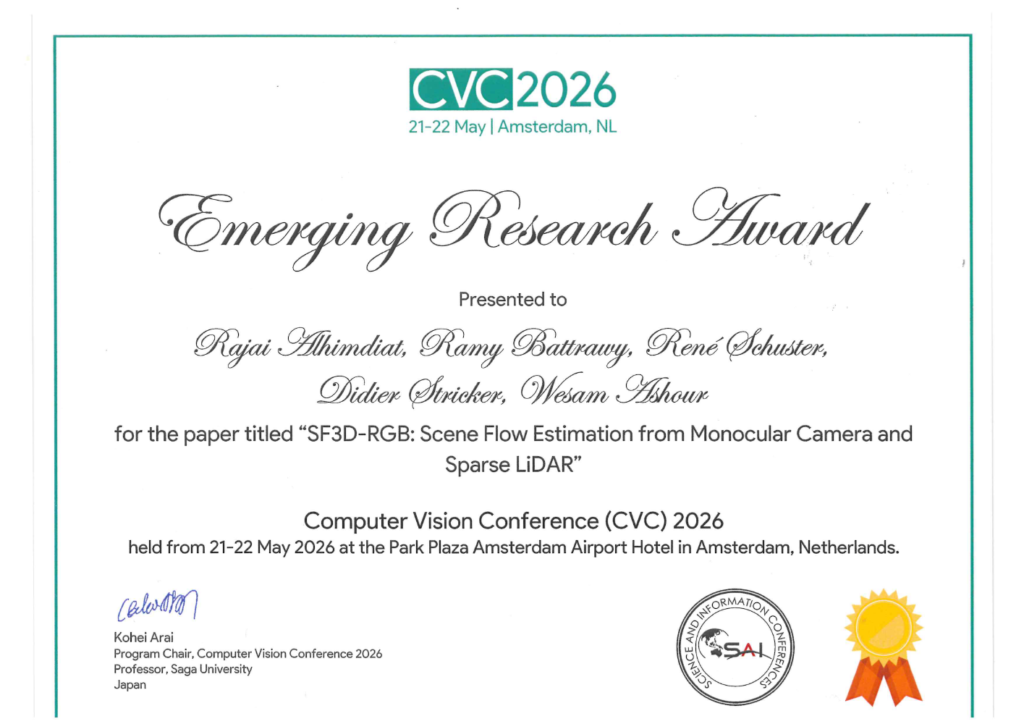
The paper presents results of our collaboration with the Islamic University of Gaza on sensor fusion for 3D scene flow estimation. Our work has received the Emerging Research Award, highlighting the quality of the presented paper.
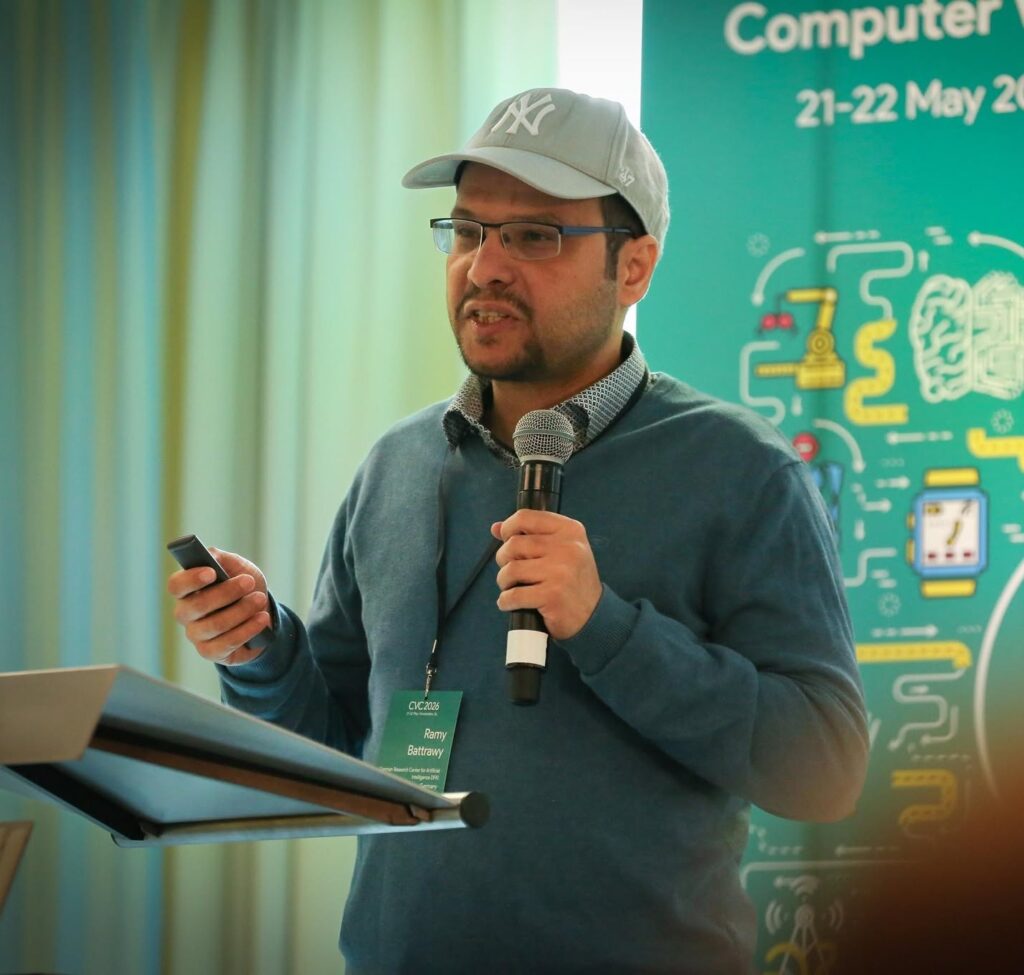
The Computer Vision Conference 2026 took place in Amsterdam, NL, from May 21st to 22nd.
The Augmented Vision department has 3 papers accepted at the upcoming ICPR 2026 conference. The conference will be taking place at the International Convention Center, Lyon, France, from August 17th to 22nd. The accepted papers are:
Several researchers of the Augmented Vision department have recently received prestigious reviewer awards from the leading computer vision and machine learning conferences.
4 AV members (Dr. Jason Rambach, Dr. Alain Pagani, Shaoxiang Wang and Yaxu Xie) have received the Outstanding Reviewer of the CVPR 2026 conference, given to the top 6.1% out of 25.149 reviewers. The IEEE / CVF Computer Vision and Pattern Recognition Conference (CVPR) is the premier annual computer vision event. CVPR 2026 will be held in Denver, CO, from June 3rd to 7th, 2026.
The complete list of outstanding reviewers for this year can be accessed HERE
In addition, Shashank Mishra has received the Gold Reviewer award of the ICML conference, given to the top 25% reviewers. The International Conference on Machine Learning (ICML) is the premier Machine Learning conference world-wide. ICML 2026 will be held Seoul, South Korea, from July 6th to 11th, 2026.
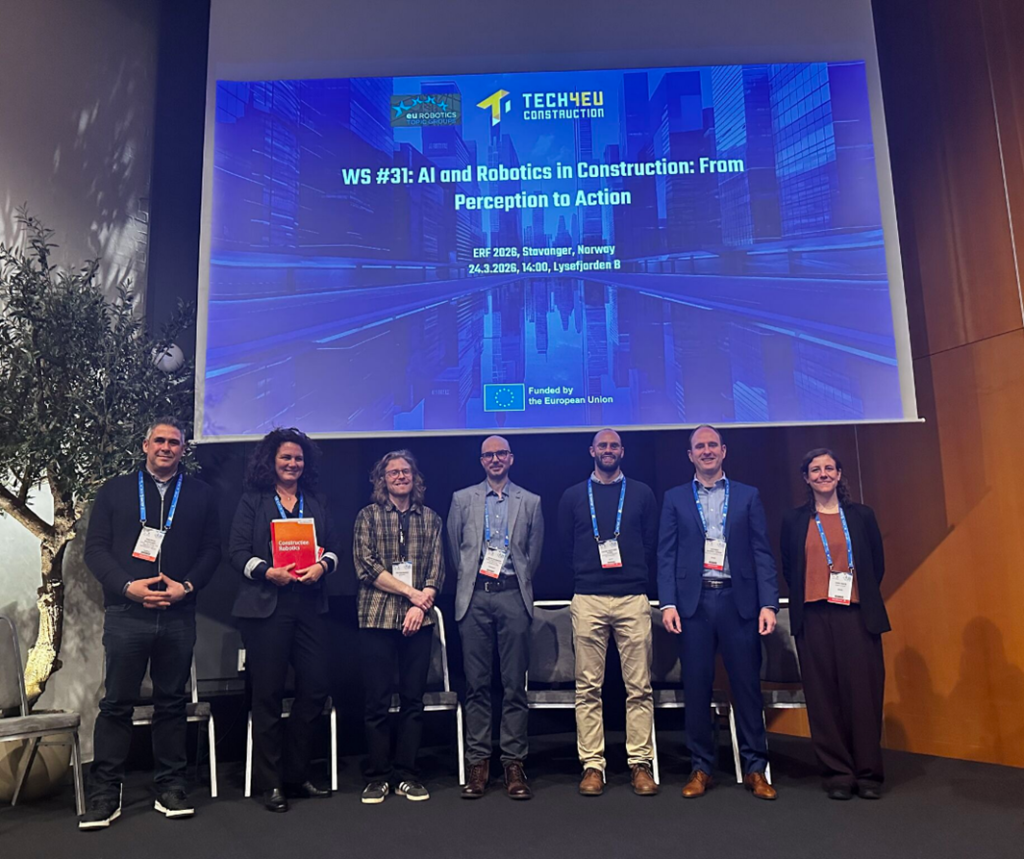
The workshop included presentations on the current state of 6 EU Horizon projects on construction robotics (Beeyonders, RobetArme, ShieldBoT, Target-X, XSCAVE, DISCOVER), followed by a round table and interactive session with the audience on the challenges and opportunities of robotic projects in construction.
The department Augmented Vision has 4 accepted papers at the upcoming CVPR 2026 conference taking place from June 3-7, 2026 at the Colorado Convention Center, Denver, USA.
The CVPR conference is the premier international conference in computer vision and pattern recognition.
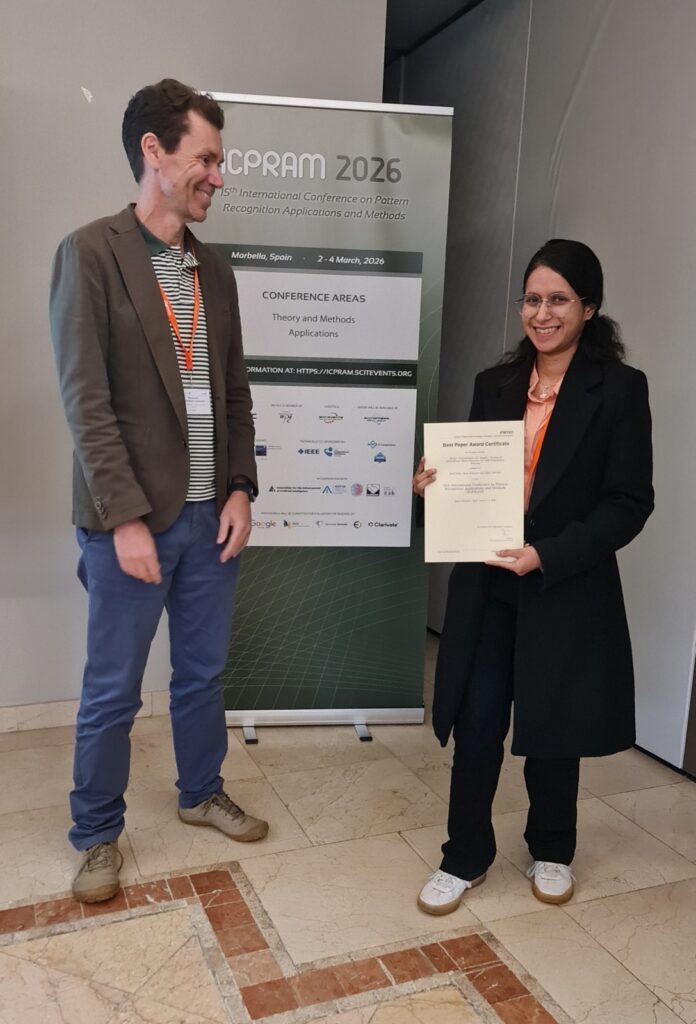
We are happy to anounce that our work on sensor generalization has won a Best Paper Award at ICPRAM 2026. The conference was held in Marbella, Spain, from March 2nd to 4th.
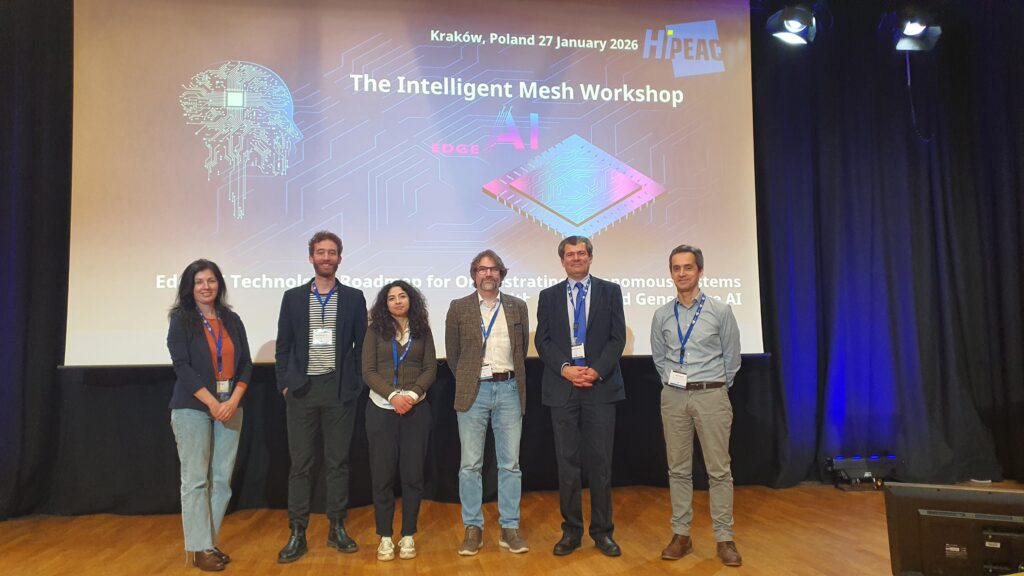
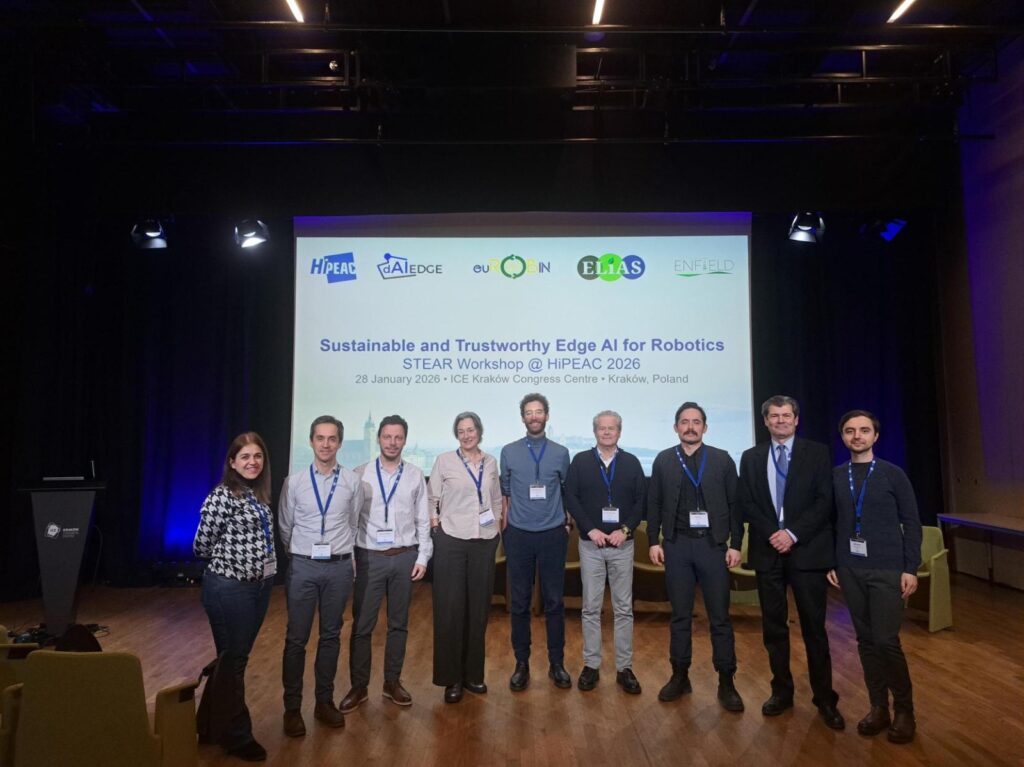
The Network of Excellence dAIEDGE organized two strategic workshops at the High Performance Embedded Architectures and Compilers Conference HiPEAC 2026, which took place in Krakow, Poland from January 26 to 28. The events brought together leading researchers, industry representatives and European initiatives to discuss the future of distributed, autonomous and trustworthy edge AI systems.
The workshop “The Intelligent Mesh: Edge AI Technology Roadmap for Orchestrating Autonomous Systems with Agentic and Generative AI”, co-organized by Ovidiu Vermesan from SINTEF, Alain Pagani from DFKI, Marcello Coppola from ST Microelectronics and Fabian Chersi from CEA, focused on the next generation of edge AI architectures. Discussions addressed heterogeneous hardware platforms, edge accelerators, neuromorphic approaches and optimized AI frameworks, as well as Small Language Models and Vision Language Models tailored for embedded systems. A central theme was agentic AI at the edge and the vision of an intelligent mesh of autonomous systems capable of collaboration and orchestration. The workshop contributed to shaping a European roadmap for secure, sovereign and scalable edge AI.
The second workshop, “Sustainable and Trustworthy Edge AI for Robotics”, was co-organized by the Networks of Excellence dAIEDGE, euROBIN, ELIAS and ENFIELD. It featured keynote talks by Maximilian Durner from DLR, Jean Marc Bonnefous from TCS, Georgios Spathoulas from NTNU and Eyup Kun from KU Leuven, and included two technical sessions on efficient, regulation-aware and human-centered AI for robotic systems. The workshop concluded with a panel discussion moderated by Alain Pagani on aligning European lighthouse strategies for sustainable, trustworthy and efficient AI.
Together, the two workshops highlighted dAIEDGE’s leading role in fostering collaboration across European AI networks and in advancing a coordinated strategy for next generation edge intelligence.
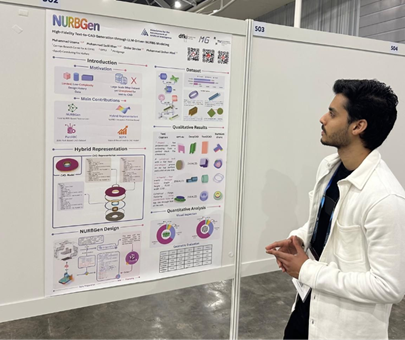
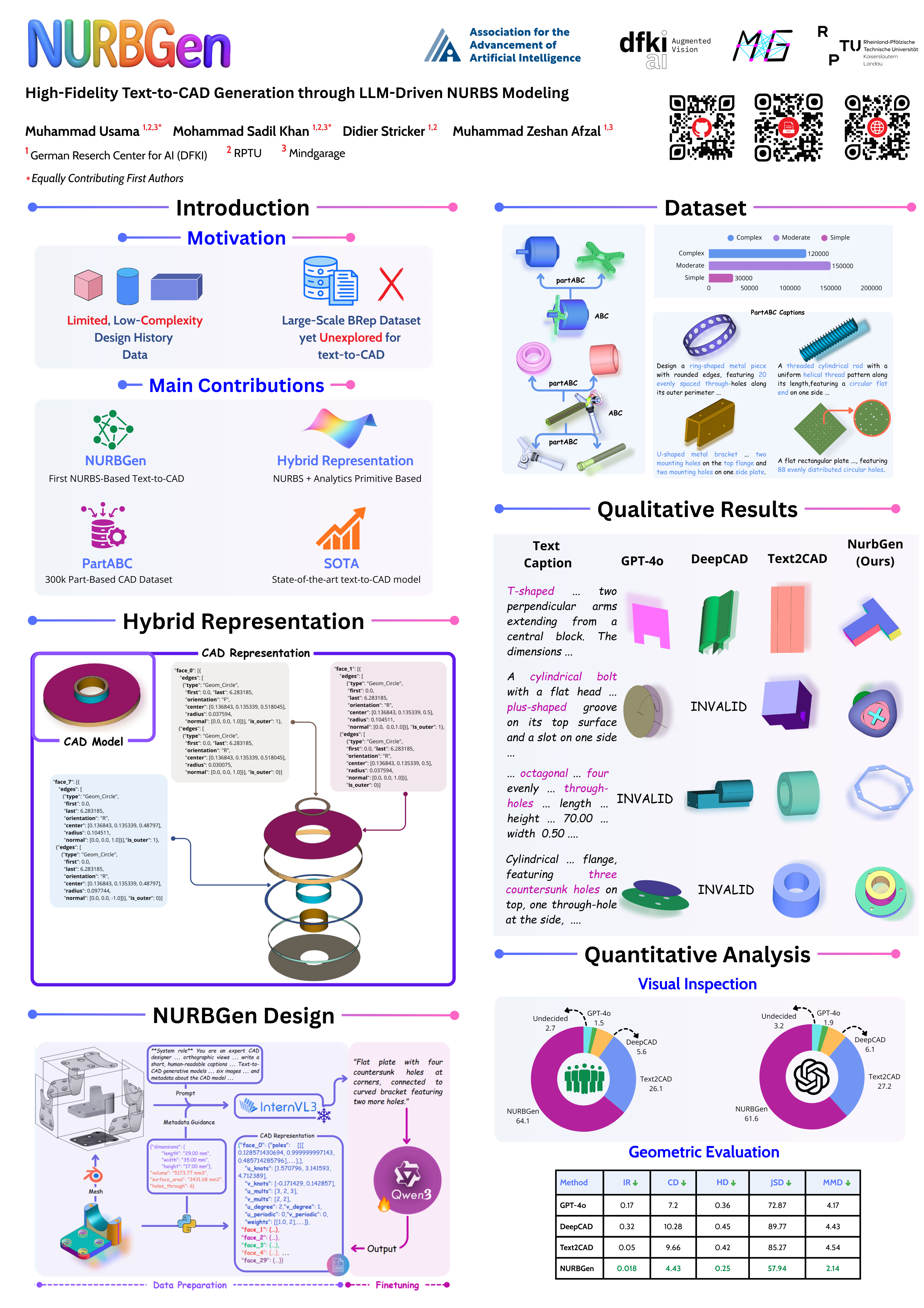
We are glad to announce that our paper, NURBGen: High-Fidelity Text-to-CAD Generation through LLM-Driven NURBS Modeling, has been accepted at the Fortieth AAAI Conference on Artificial Intelligence (AAAI) 2026 Singapore. Co-led by Muhammad Sadil Khan and Muhammad Usama under the supervision of Didier Stricker and Muhammad Zeshan Afzal, our research introduces the first framework to generate high-fidelity, editable 3D CAD models directly from text by fine-tuning a large language model to produce structured NURBS surface parameters. To overcome the limitations of existing mesh-based or design-history systems, we propose a hybrid symbolic representation that combines untrimmed NURBS with analytic primitives to robustly handle trimmed surfaces and degenerate regions while maintaining token efficiency. Evaluated on our new partABC dataset of 300k annotated CAD components, NURBGen demonstrates strong performance in geometric fidelity and dimensional accuracy, as confirmed by expert evaluations.